Cleaning supplies list
Most cleaning businesses over-buy products and under-buy cloths. This is the working list: five chemicals in the caddy, four colours of microfiber, and the van kit that stops a job stalling — split into what a cleaner carries, what stays on the van, and what gets counted back in every week.
Before you order
- Decide concentrate or ready-to-use before you buy anything
- Check every site's rules on what may be used on its surfaces
- Set up one labelled dilution station, not one per van
Every week after
- Count cloths back in — they are the item that disappears
- Check concentrate levels against the dilution log
- Reorder before the last site of the week, not after
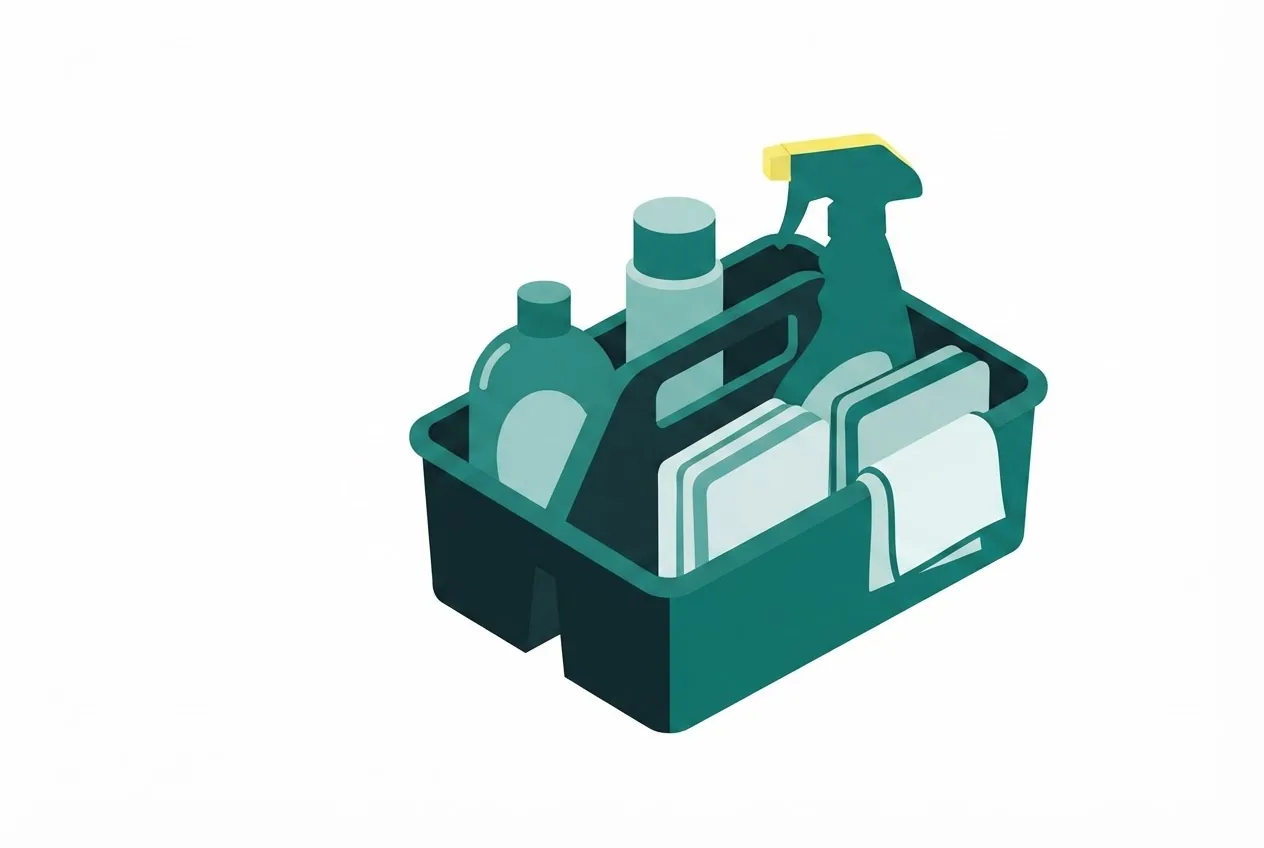
In the caddy (per cleaner)
- All-purpose cleaner, ready-to-use
- Bathroom acid or descaler
- Degreaser for kitchens
- Glass cleaner
- Cream cleanser for scouring
- Microfiber cloths, four colours, six of each
- Non-scratch pads and a grout brush
- Toilet brush with a holder, one per site
- Nitrile gloves
On the van
- Vacuum with a filtered bag and a crevice tool
- Flat mop with at least four spare heads
- Bucket with a wringer, or two buckets
- Extension pole and a duster head
- Step stool that meets the site's rules
- Spare liners in the site's sizes
- Spill kit and wet-floor signs
- First aid kit and eye wash
- Concentrate stock and a labelled dilution station
Restock weekly
- Cloths laundered and counted back in
- Mop heads laundered, worn ones binned
- Concentrate levels checked against the dilution log
- Liners, paper and soap for every site on the round
- Gloves and pads
Five chemicals cover almost everything
All-purpose, bathroom acid, degreaser, glass and a cream cleanser will handle the overwhelming majority of residential and light commercial work. Everything beyond that is either a specialist surface or a salesperson.
Buying concentrate rather than ready-to-use typically cuts the chemical line of your costs by more than half, but only if the dilution is actually measured. A cleaner eyeballing a glug into a bottle is more expensive than ready-to-use, not less.
Cloths are the real consumable
Microfiber does the work; the chemical mostly loosens it. Six cloths per colour per cleaner is the number that survives a full day without cross-using, and it is the number most new businesses underbuy by half.
Launder by colour, without fabric softener — softener coats the fibre and kills the pickup that you paid for.
The van kit that stops a stall
The items that stop a job dead are boring: a spare mop head, the right bin liners, a step stool the site will accept, and a spill kit. None of them are exciting and all of them are cheaper than a wasted visit.
Keep the first aid kit and eye wash on the van as standard, not as a site-by-site decision.