Colour-coded cleaning cloths
/ 3 min read
Four colours, laundered separately, counted in and out. It is the cheapest quality system in cleaning and the one most often owned on paper and ignored on the cart.
Before you quote
- Buy six cloths per colour per cleaner
- Set up four laundry bags, not one
- Print the code where the cart is loaded
Before you leave
- Count the cloths back in
- Bin faded or shedding cloths
- Re-brief on the first crossover, not the third
The four colours
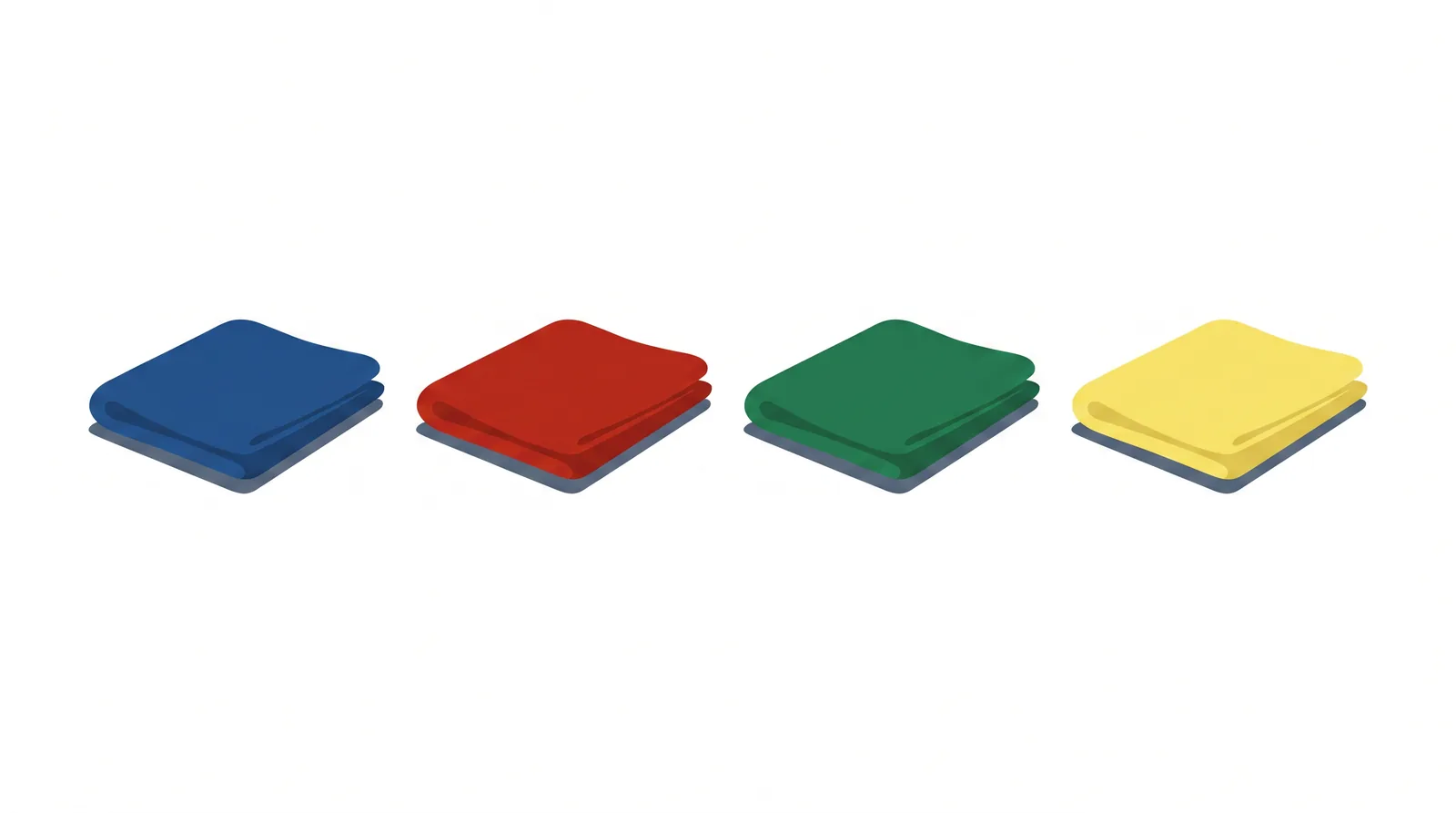
The convention used in almost every commercial specification is: blue for glass and general low-risk surfaces, red for restrooms, green for kitchens and food areas, yellow for general and lower-risk washroom fittings. Some specifications swap yellow and green; what matters is that yours is written down and never varies.
| Colour | Used for | Never used for |
|---|---|---|
| Blue | Glass, mirrors, low-risk surfaces | Anything in a restroom |
| Red | Toilets, urinals, restroom floors | Any food surface, ever |
| Green | Kitchens, food preparation areas | Restrooms |
| Yellow | General surfaces, washroom fittings | Food preparation |
This site uses the same four colours as its category codes, for exactly this reason: colour carries the category, and the name is always printed beside it.
Why it exists
Cross-contamination is not a tidiness concern. A cloth that wipes a toilet rim and later a kitchen counter is moving the thing the client hired you to remove, and in a commercial or food setting it is an audit failure.
A single shared bag of cloths defeats the entire system at the laundry stage. Four colours washed together is four colours of the same cloth.
Making it stick
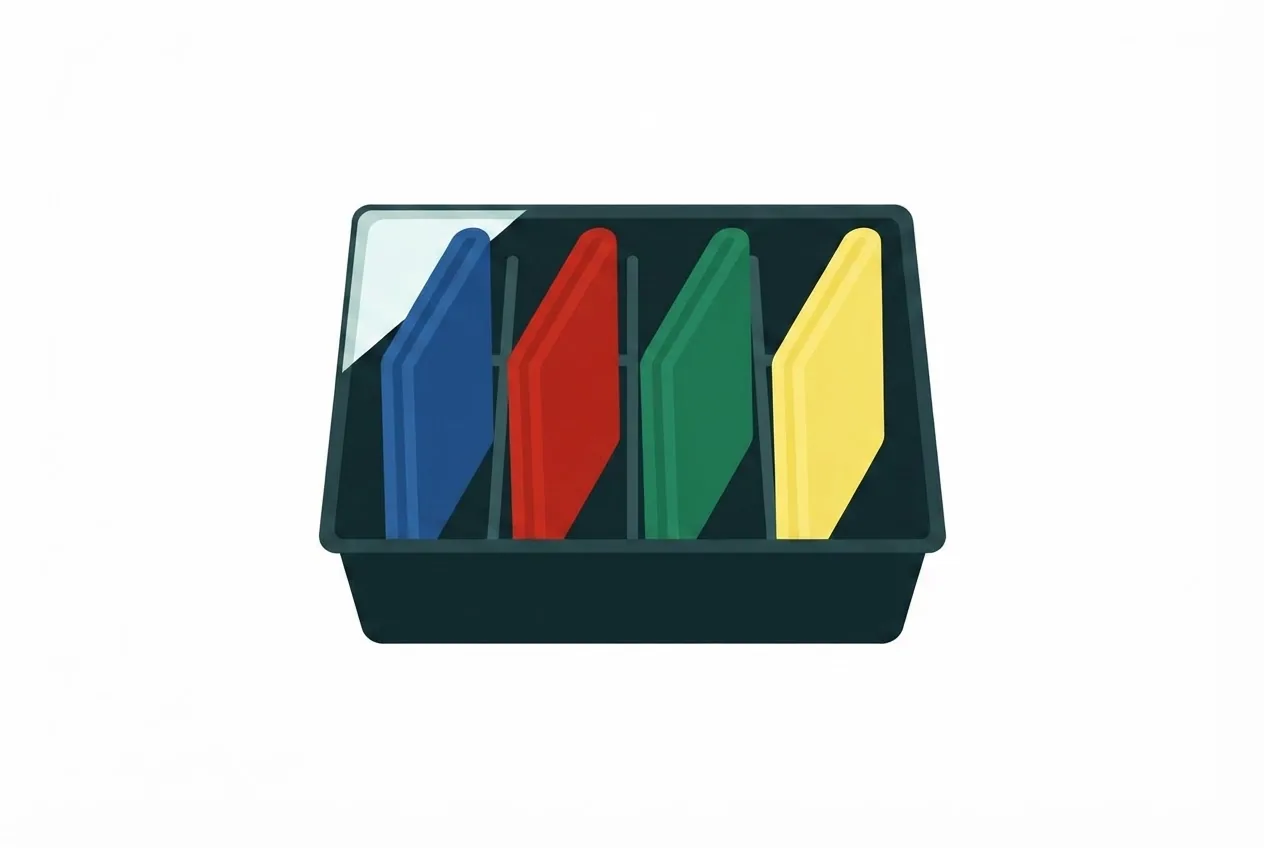
Three things make the difference: enough cloths that a cleaner never has to reuse one, a cart layout where the colours are physically separated, and a supervisor who checks the bag rather than the surface.
Six per colour per cleaner is the number that survives a full day. Most new businesses buy half that and then wonder why the system collapses by Wednesday.
Looking after the microfiber
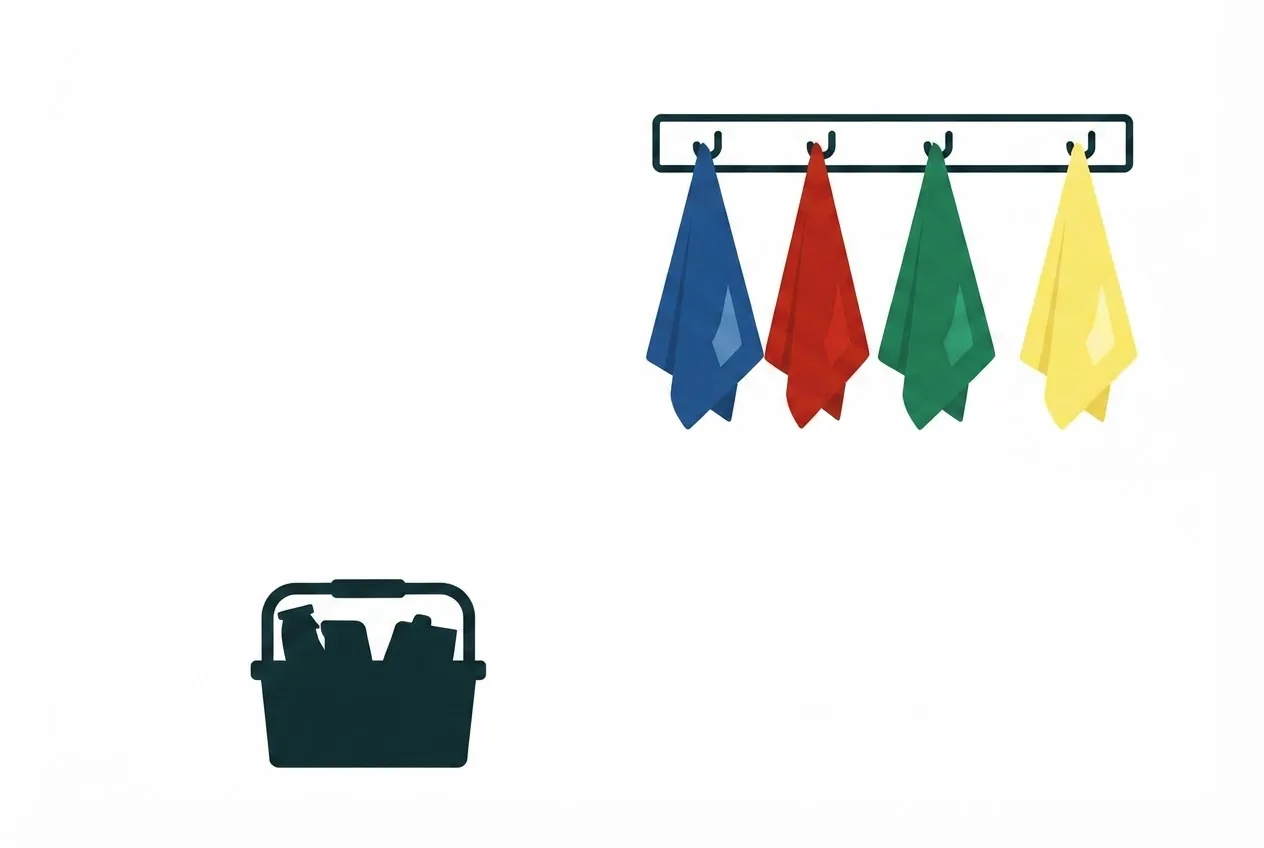
Wash without fabric softener. Softener coats the fibre and destroys the pickup you paid for, which is the entire reason microfiber outperforms cotton. Wash hot, dry low, and bin anything that has gone slick or started to shed.
A cloth that no longer grabs is not a cheap cloth; it is a slow cleaner.