Best vacuum for a cleaning business
/ 3 min read
A commercial vacuum is a labour decision, not a shopping decision. The right machine buys back minutes on every job; the wrong one costs you a cleaner's hour a week in filter changes and cord wrangling.
Before you quote
- Decide the dominant floor type on your round
- Check the noise limit at your sites
- Know who will be carrying it, and how far
Before you leave
- Log filter and bag changes — they are the real cost
- Bin a machine that has lost suction, do not nurse it
- Buy the second one before the first one dies
Three machine types, three jobs
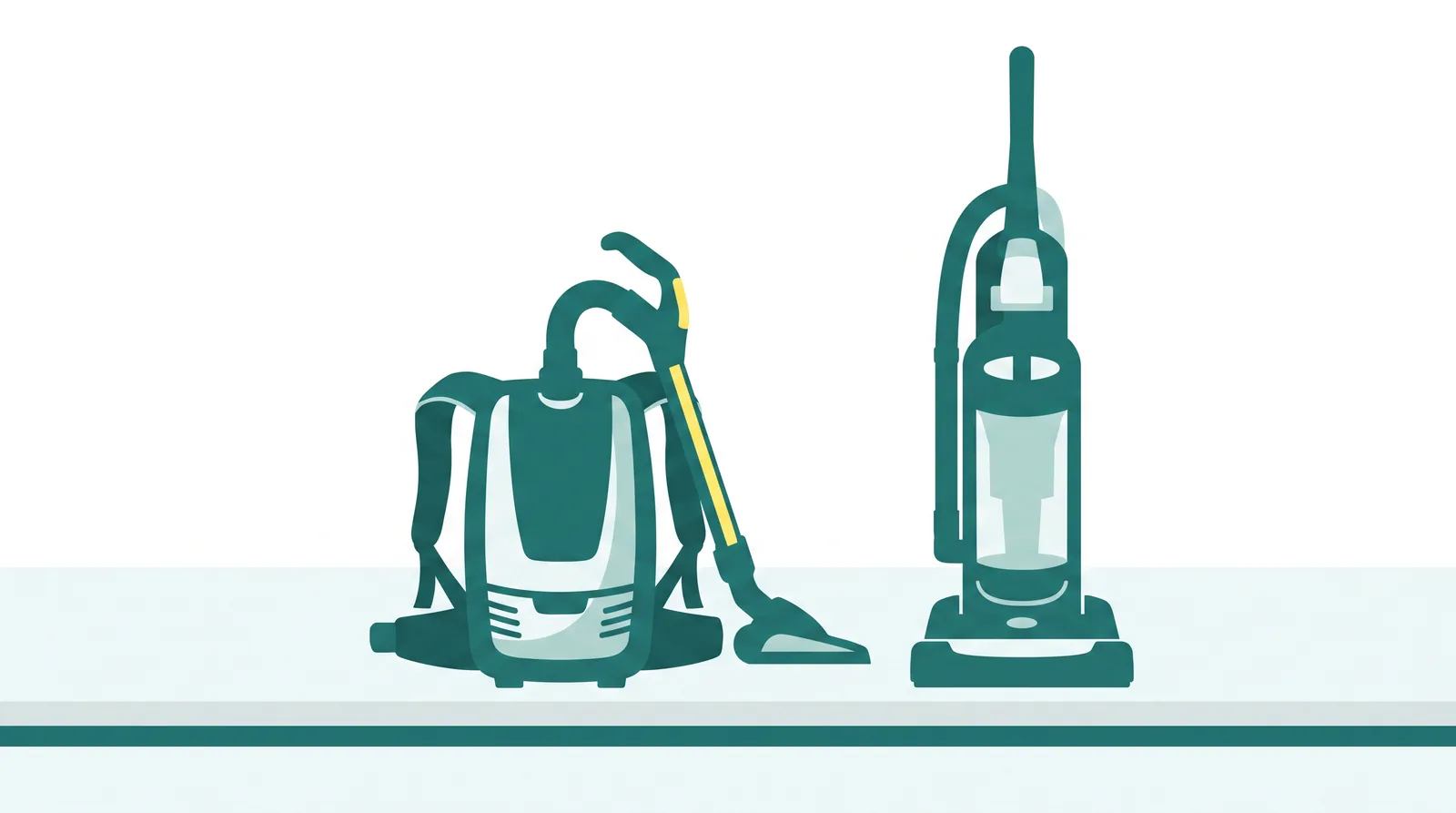
| Type | Fastest at | Weakest at | Watch for |
|---|---|---|---|
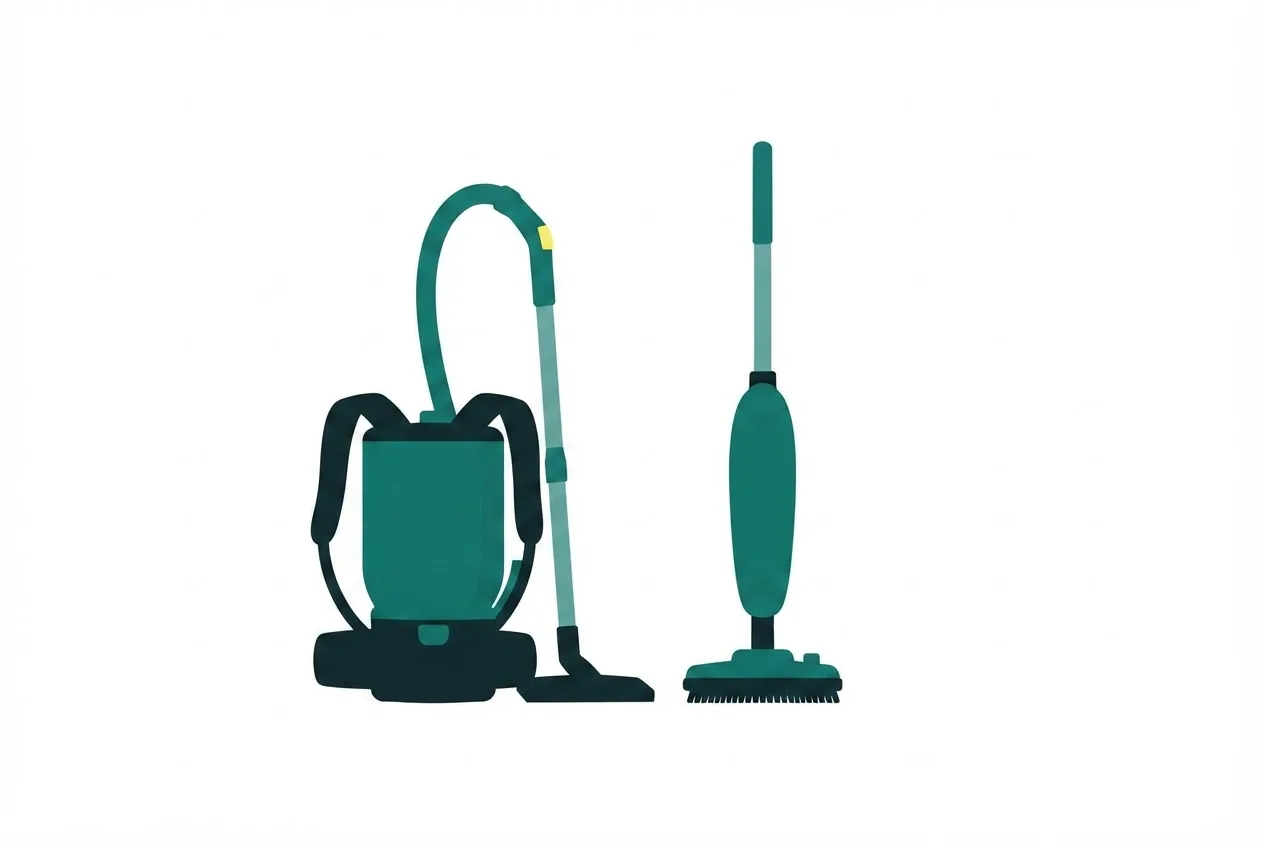
| Backpack | Open commercial floors, stairs, edges | Deep carpet pile | Operator fatigue and harness fit |
| Upright | Residential carpet, single rooms | Stairs, under furniture | Brush roll tangling on hair |
| Canister | Hard floors, awkward furniture, cars | Large open areas | Dragging the body over thresholds |
For a mixed residential round, an upright plus a small canister covers almost everything. For nightly commercial work on open floors, a backpack is usually the fastest machine there is and the one crews resist most.
Filtration is the specification that matters
In occupied buildings, and especially in medical, school and childcare settings, the filtration standard is often written into the specification. A machine that recirculates fine dust fails an audit even when the floor looks clean.
Never use a domestic vacuum on a construction site. Silica and plaster dust destroy the motor and — the real issue — a machine without proper filtration puts respirable dust back into the air. Site work needs a filtered site vacuum.
The cost that is not the price
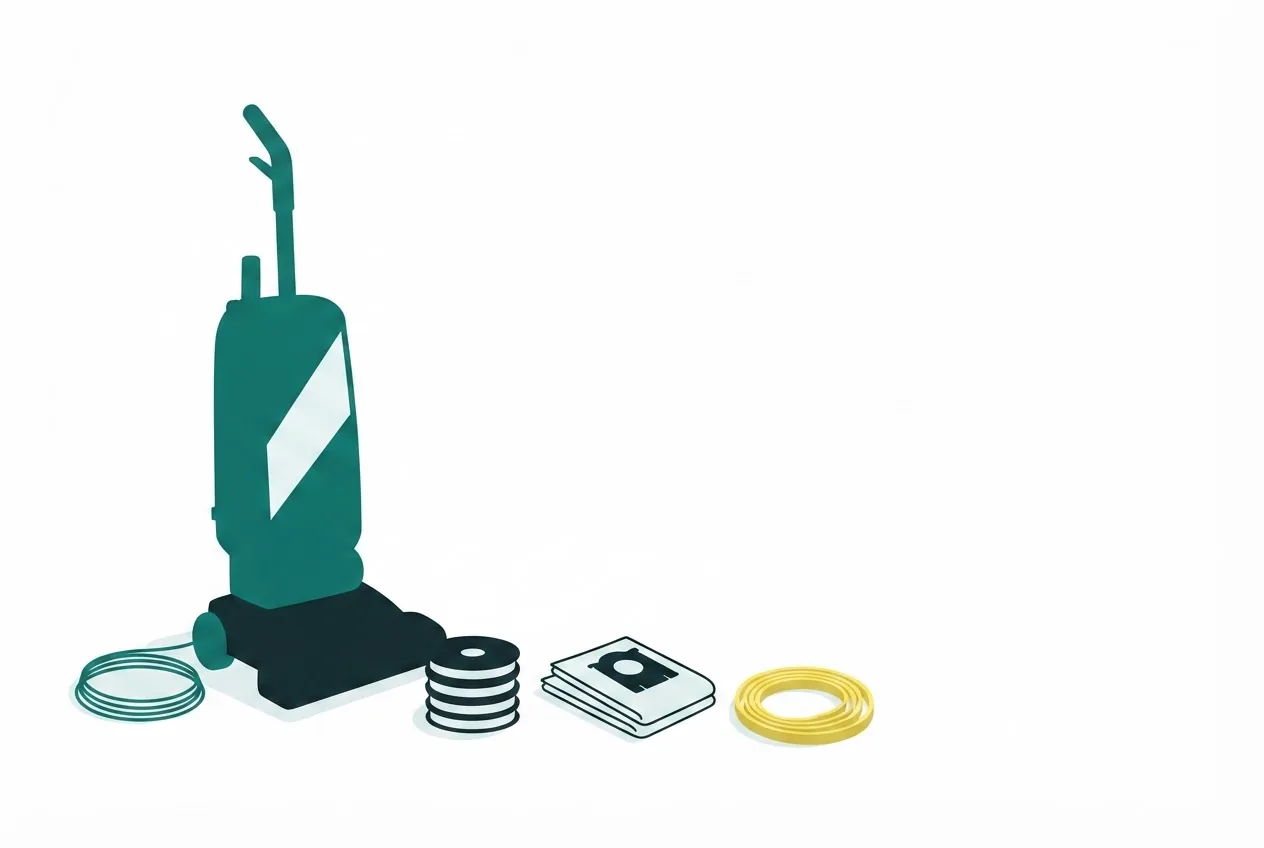
Bags, filters, belts and brush rolls are the running cost, and on a busy round they add up faster than the machine did. Before buying, price a year of consumables for the model, not just the model.
Cord length matters more than motor size on commercial floors: every extra socket change is a minute, and minutes on a nightly route are the whole margin.
How to choose in one afternoon
Write down the three floor types you meet most, the heaviest thing your smallest cleaner has to carry upstairs, and the noise limit at your fussiest site. Those three constraints eliminate most of the market before you read a single review.
Then buy two of whatever survives. A single machine is a single point of failure for a whole day's work.